AI Audio Interview Software — Voice-First Screening Without Video Pressure, explained.
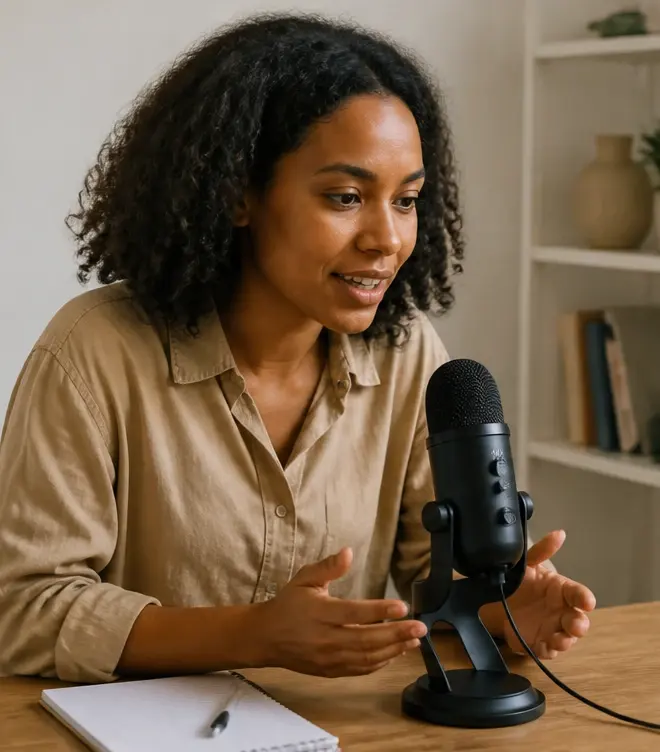
AI audio interviews sit between phone and video screening, offering voice-led evaluation without the camera barrier that suppresses completion rates in many candidate pools. Candidates respond to interview questions by speaking — no video required — and the AI evaluates communication clarity, response quality, and role fit. The format preserves the spoken communication signal that resumes and written assessments miss, while removing the scheduling overhead of live phone calls. Every audio interview produces a transcript, competency scorecard, trust signals, and ranking that your team can review on their own time.

Capture spoken communication without camera-related completion drop-off
AI audio interviews sit between phone and video screening, offering voice-led evaluation without the camera barrier that suppresses completion rates in many candidate pools. Candidates respond to interview questions by speaking — no video required — and the AI evaluates communication clarity, response quality, and role fit. The format preserves the spoken communication signal that resumes and written assessments miss, while removing the scheduling overhead of live phone calls. Every audio interview produces a transcript, competency scorecard, trust signals, and ranking that your team can review on their own time.
- Async review — no live listening sessions required
Higher response rates than video for many candidate demographics
Capture spoken communication signal in a lighter-weight format than video — candidates respond by voice without camera pressure, and your team reviews transcripts, scorecards, and rankings asynchronously.
- Lighter-weight candidate experience than full video interviews
The gap between phone and video screening
Video interviews capture rich signal but come with a real cost: completion rates drop when candidates are camera-shy, in shared living spaces, on limited data plans, or simply uncomfortable being recorded on video. Phone interviews solve the camera problem but require live coordination or feel impersonal as one-way recordings. Many teams end up choosing between completion rate and signal depth.
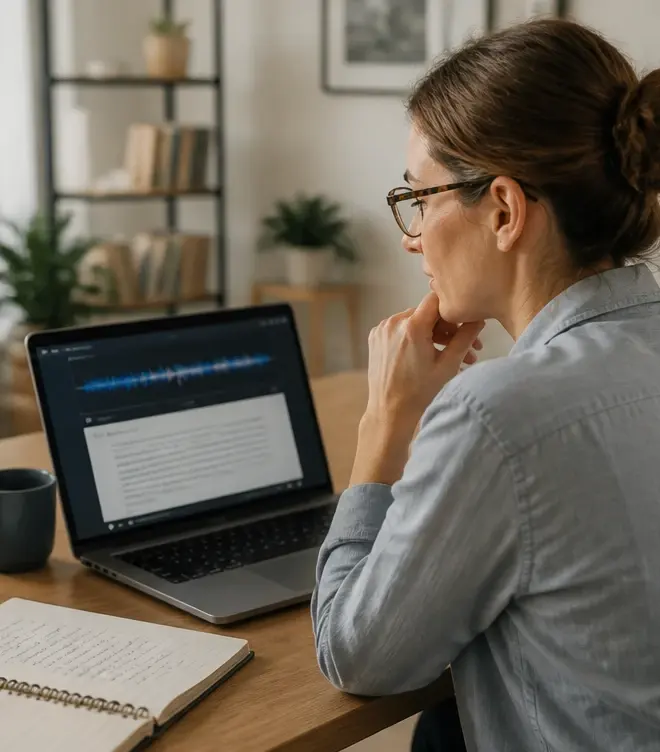
AI audio interviews bridge this gap. Candidates respond by speaking — just like a phone call — but do it on their own schedule, without live coordination. The AI evaluates their spoken communication, asks relevant follow-ups, and produces the same structured outputs your team gets from phone or video interviews. The format preserves the voice signal that matters for most roles while removing the camera barrier that tanks completion in others.
Why teams choose audio over video or phone
Higher completion rates
Removing the camera requirement increases interview completion rates, especially among frontline, hourly, entry-level, and mobile-first candidate pools.
Spoken communication signal
Audio captures clarity, fluency, confidence, and communication style — signals that resumes, written assessments, and chatbots completely miss.
No scheduling, no phone tag
Candidates complete audio interviews asynchronously. No calendar coordination. No missed calls. No voicemail tag.
Lighter review burden than video
Recruiters can review transcripts and scorecards without watching full video recordings. Listen to key moments when needed, scan the rest.
Best use cases for AI audio interviews
AI audio interviews work best when spoken communication matters for the role but video adds friction without proportional signal gain. They're also the format of choice for candidate pools where mobile devices and limited bandwidth are realities.
- Screen customer support, call center, and phone-based sales roles where voice communication IS the job.
- Use for high-volume hourly hiring where video completion rates historically underperform.
- Reach candidates in regions or demographics where video interviews face device, bandwidth, or cultural barriers.
- Collect spoken language fluency evidence for roles requiring multilingual communication.
- Add voice screening to roles where communication matters but presence and appearance don't — operations, logistics, backend engineering.
Audio vs. phone vs. video: choosing the right format
| Interview format | Best for | AI Audio Interview fit |
|---|---|---|
| AI Audio Interview | Voice signal without camera pressure. Higher completion. Async review. | Ideal for communication screening where camera adds friction without proportional value. |
| AI Phone Interview | Live dial-in experience. Familiar phone-call format. Strong completion. | Consider phone when candidates expect a traditional call experience or need PSTN dial-in. |
| AI Video Interview | Maximum signal including presence, professionalism, and non-verbal cues. | Use video when visual presence directly relates to job performance or stakeholder expectations. |
| Written/text screening | Tests knowledge and reasoning. Zero communication signal. | Add audio when you need spoken communication evidence but don't need video depth. |
Recommended AI audio interview workflow
Choose audio as the screening format
Select audio when the role requires spoken communication assessment but camera adds unnecessary friction for your candidate pool.
Set up role-specific voice prompts
Use AI-generated or custom questions that test communication, clarity, role understanding, and relevant competencies through spoken responses.
Invite candidates with clear instructions
Let candidates know they'll respond by voice — no camera needed. Include device and environment tips to improve audio quality.
Review transcripts, scorecards, and rankings
Scan transcripts for key responses, listen to critical moments when needed, and use scorecards and rankings to prioritize follow-up.
How this was verified
Feature capabilities described here were verified against the live InterviewFlowAI product pages and the published pricing page in August 2026. Plan availability can change; the pricing page is the source of truth.
Frequently asked questions
How is an audio interview different from a phone interview?
An audio interview is fully asynchronous: the candidate records answers in their own time with no dial-in. A phone interview uses a live call format that candidates find more familiar. Both are voice-only and produce the same outputs.
Why choose audio over video?
Because completion rates rise when the camera requirement is removed. For hourly, entry-level and low-bandwidth candidate pools, video setup is a real drop-off point and audio still captures spoken communication.
Does the recruiter have to listen to every recording?
No. Every response is transcribed and scored, so reviewers read the scorecard and jump to the relevant transcript section rather than listening end to end.
Which roles suit audio screening?
Call centre, customer support, phone-based sales and any role where spoken clarity is job-relevant but on-camera presence is not.
Can candidates redo an answer?
Retake rules are configured per interview rather than fixed. Decide the policy before launch and state it to candidates, because changing it mid-campaign makes results harder to compare fairly.
Make your next hiring flow faster.
See how InterviewFlowAI can streamline screening for your team.