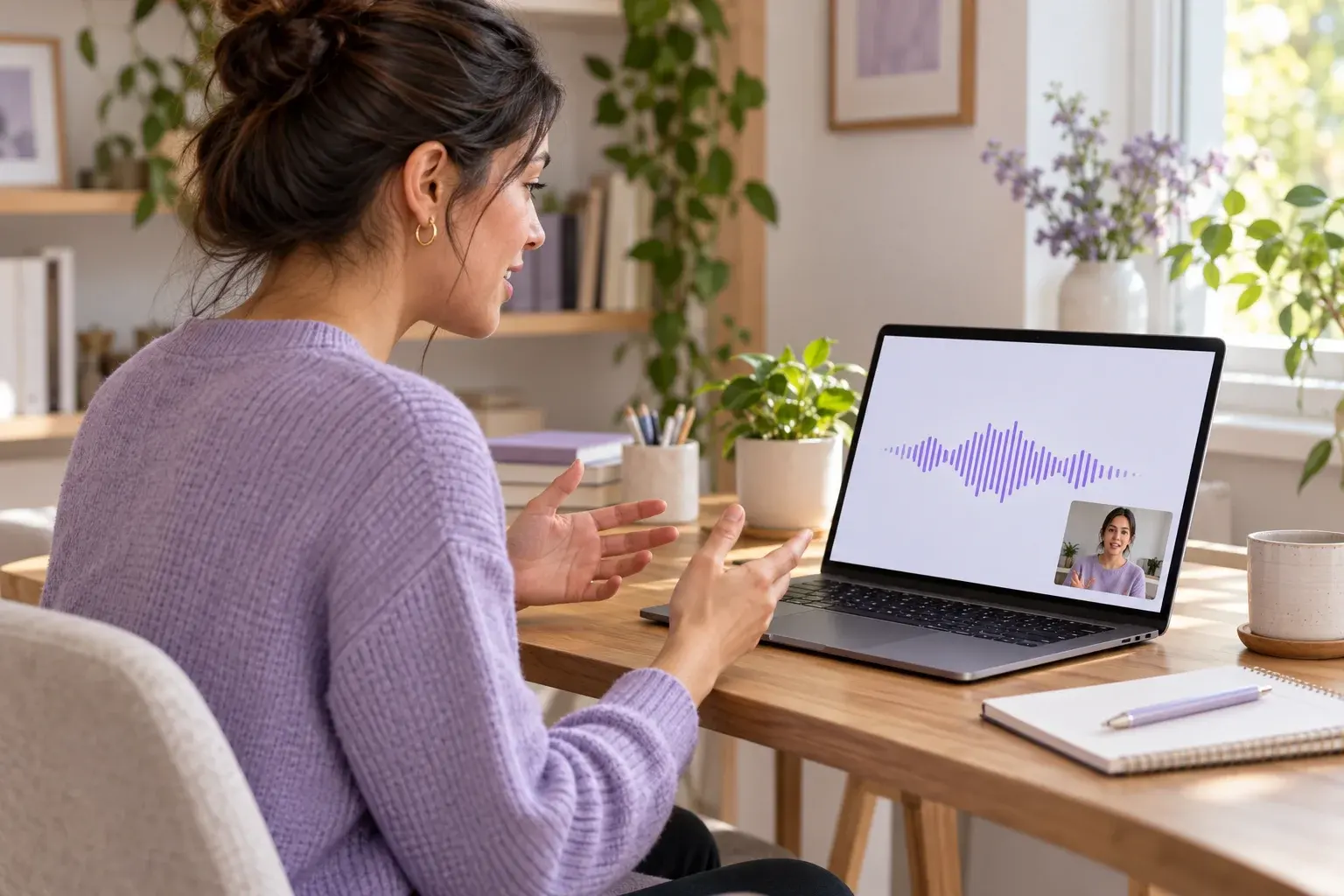
AI Interviewer, explained.
An AI interviewer is software that conducts a structured job interview without a recruiter on the call. InterviewFlowAI's AI interviewer runs first-round phone and video interviews 24/7 in 16 languages, asks follow-up questions, scores every answer against the same rubric, and returns a transcript, scorecard and ranked shortlist. An interview of up to 10 minutes costs $0.83 to $0.99 on Growth and Scale plans.
An AI interviewer is software that conducts a structured job interview on its own, with no recruiter on the call. InterviewFlowAI's AI interviewer speaks with candidates by phone or video, in 16 languages, at any hour. It asks the questions you approve, follows up when an answer is vague, and scores every response against the same rubric. Your recruiters stop running repetitive screening calls and start their day with a ranked list of candidates worth a human conversation. Each interview of up to 10 minutes uses one credit: $0.99 per interview on monthly Growth and Scale plans, or $0.83 on yearly plans.

Meet candidates on the channel that suits them.
Candidates start from a link in the browser, with or without video, or take a call from the AI interviewer on Growth and above. There is nothing to schedule and nothing to install.
- Phone, audio or video
- Available 24/7
A real conversation that probes each answer.
The AI interviewer listens, asks up to two follow-ups when an answer is thin, and scores the full answer against your rubric. Your team gets the recording, transcript and scorecard.
- Follow-up asked from the answer
- Scored against your rubric
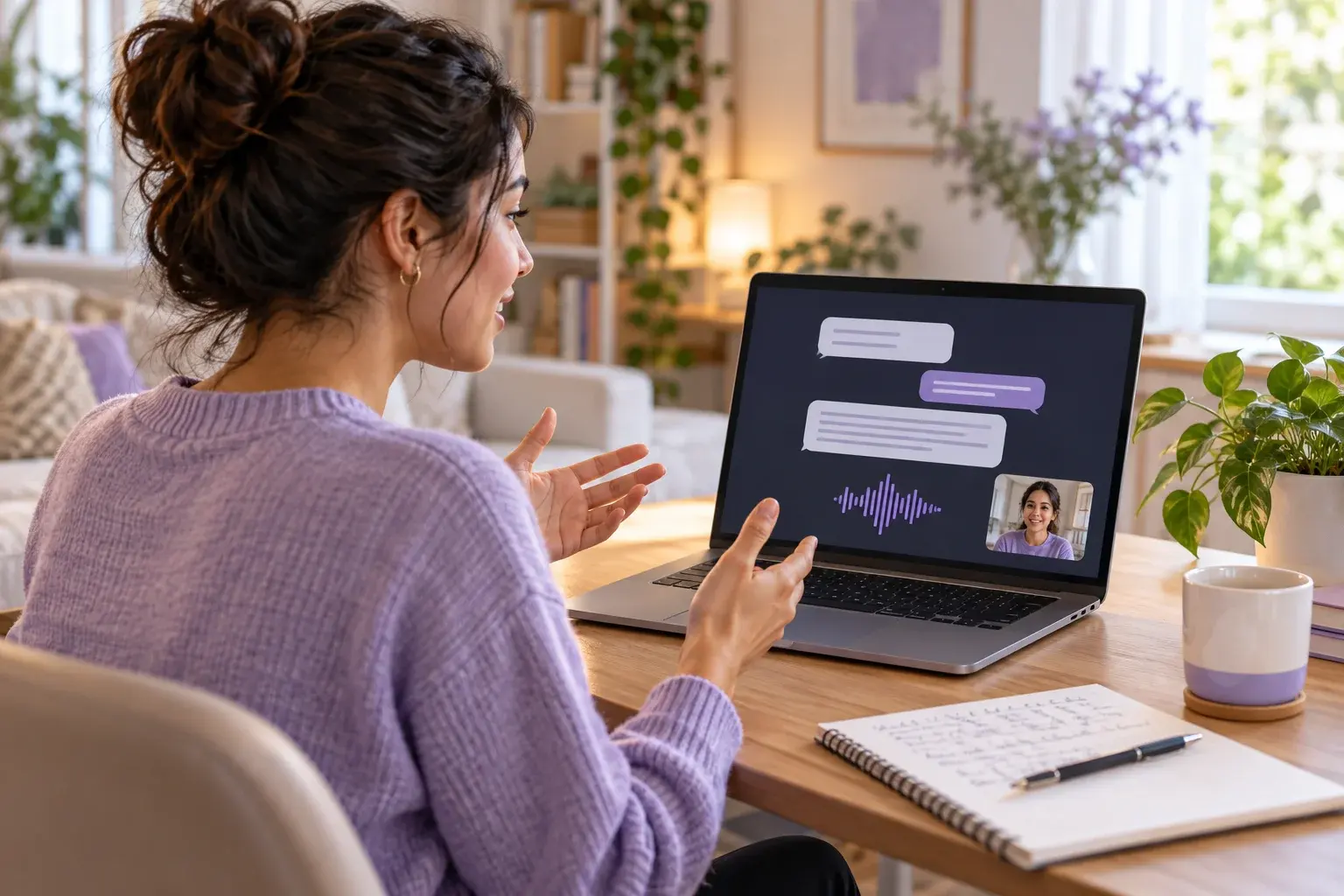
What an AI interviewer does
A first-round screen asks the same eight to twelve questions of every applicant: experience, motivation, availability, salary expectations and a few role-specific checks. A recruiter spends 20 to 30 minutes per call, plus scheduling and notes. At 200 applicants that is more than two working weeks.
An AI interviewer takes over that conversation. You approve the questions and the scoring rubric once. Every candidate then gets the same interview, at a time that suits them, and your team reviews structured results instead of running the calls.
How the InterviewFlowAI AI interviewer works
Create the interview from your job description
Paste the job description. The AI interviewer drafts role-specific questions and a scoring rubric, which you edit and approve.
Invite candidates by link, email, CSV or your ATS
Candidates get an email invitation and start the interview in the browser, or by phone on Growth and above, when they are ready. No app or account is needed.
The AI runs a two-way interview
It asks each question, listens to the answer, and follows up when an answer is thin, the way a good recruiter would.
Your team reviews a ranked shortlist
Each interview returns a transcript, recording, competency scorecard, trust signals and a rank against other applicants for the role.
Phone, audio or video: choose how candidates join
Set the interview channel for each role. The questions, rubric and report stay the same on every channel.
Video interview in the browser
Candidates join a web call with their camera on and talk to the AI interviewer face to face. Use it when presence matters, as in customer-facing and sales roles.
Audio-only web interview
Leave the video requirement off and candidates answer by voice in the browser. It suits camera-shy candidates and roles where only the answers matter.
Phone interview
On Growth and above, connect your own phone number and the AI interviewer calls the candidate. Choose phone only, or let candidates pick phone or web call.
Where the interview questions come from
You choose one or more question sources for each role. Manual questions are the ones you write, and every candidate hears them. Resume-based questions are written for each candidate from their resume, following instructions you give, such as "probe ownership and depth of prior work". Skill-based questions test the skills you list, with separate instructions for each skill.
Each manual question carries its own rubric, so the AI scores every answer the same way:
| Rubric field | What you set |
|---|---|
| What you are looking for | The evidence or traits a good answer should show |
| Strong answer (5) and weak answer (1) | What a top answer and a poor answer sound like |
| Weight | 1 to 10, so role-critical questions count for more |
| Max follow-ups | 0 to 2 follow-up questions when an answer needs more evidence |
| Max duration | 0.5 to 10 minutes per question |
What candidates experience
- An invitation with a link that stays open for 1 to 365 days (4 by default), so candidates interview when it suits them.
- An optional welcome video from your team before the AI interview starts.
- An AI interviewer with the name, voice and avatar you choose, which introduces the interview and repeats a question when asked.
- The interview in their language: Arabic, Chinese, Dutch, English, French, German, Hindi, Indonesian, Italian, Japanese, Korean, Malay, Portuguese, Spanish, Ukrainian or Vietnamese.
- A response-time setting that lets the AI wait before replying, so candidates can pause to think without being cut off.
- Retakes only if you allow them, from 0 to 3, with the same policy for every candidate.
What the AI interviewer evaluates
Role fit and experience
Answers are scored against the must-have criteria in your rubric, with the reasoning shown next to each score.
Communication
Clarity, structure and spoken fluency, which matter for customer-facing, sales and support roles.
Technical and domain knowledge
Role-specific questions probe real understanding, and follow-ups test whether the candidate can go one level deeper.
Integrity signals
Trust Score, included at no extra cost, checks tab switching, answer authenticity and eye and face direction, so reviewers know which interviews to check closely. A flag is a reason to review the evidence, not proof of misconduct.
Inside the candidate report
- Interview summary with strengths, risks or gaps, and a score for each skill.
- The recording and full transcript. Click a line to jump to that moment, and switch to an English transcript when the interview ran in another language.
- Answers and scores for each of your questions, plus a communication score for grammar, vocabulary and conversational flow.
- The candidate's answers to your application questions, and an AI review of their resume.
- Accept, decline or star-rate the candidate, add private team notes, and export the whole report as a PDF.
AI interviewer vs other first-round screening
| Method | Recruiter time per candidate | Consistency | Follow-up questions |
|---|---|---|---|
| Recruiter phone screen | 20-30 min plus scheduling | Varies by recruiter and day | Yes |
| One-way video interview | 5-10 min to watch each recording | Same questions, manual scoring | No |
| Written questionnaire | 2-5 min to read | Same questions, easy to game | No |
| AI notetaker on a recruiter call | The full live call, with notes written for you | Varies by recruiter | Yes, from the recruiter |
| InterviewFlowAI AI interviewer | 2-3 min to read the scorecard | Same questions and rubric for everyone | Yes |
Works with your ATS
The AI interviewer can start automatically when a candidate reaches a stage in your applicant tracking system, and the results go back to the candidate's record. InterviewFlowAI integrates with Greenhouse, Ashby, Teamtailor, Workable and Recruit CRM on Growth and above, and with thousands of other apps through Zapier. Scale adds the API and webhooks for custom workflows.
You can also invite candidates without an ATS: share a public application link, embed the job on your website, send email invitations one by one, or import a CSV.
From AI interview to the next round
Set a pass score and the AI interviewer's Coordinator emails every candidate who meets it a link to book time with your team, straight after scoring or after a delay you choose. Coordinator only sends booking invitations. It never declines a candidate; that decision stays with your team.
When the human interview happens, the InterviewFlowAI Notetaker can record it with consent and write structured notes against the same candidate, so the first-round evidence and the follow-up conversation sit in one place.
AI interviewer examples by role
See how teams set up the AI interviewer for common roles.
Call center agents
Voice screening for communication clarity, empathy and composure.
Software engineers
Screen system design, backend languages and problem solving.
Sales representatives
Hear the pitch and objection handling before the first call.
Nurses and medical technicians
Triage decisions, patient empathy and compliance, screened 24/7.
Retail store associates
High-volume voice screens for customer service and reliability.
Bilingual support
Interview in 16 languages and check language proficiency.
Hiring teams using the AI interviewer
Vādma
Screened more than 1,000 global applicants for its practitioner training without scheduling each interview.
Axial Consulting
Screened 150 finance candidates with an 87% completion rate and saved more than 2,500 minutes.
Mallow Technologies
Ran 330+ structured interviews across technical, product, testing and sales roles.
What an AI interviewer costs
InterviewFlowAI prices per interview, not per recruiter seat. An interview of up to 10 minutes uses one credit. Growth is $299 a month for 303 credits ($250 a month billed yearly) and Scale is $499 a month for 505 credits ($416.60 billed yearly), so an interview costs $0.83 to $0.99. Pilot is $59 a month for 20 credits (video only; phone interviews start on Growth). Pilot, Growth and Scale each start with a 7-day trial that includes 10 interview credits.
| Plan | Price | Interview credits per month | Cost per interview |
|---|---|---|---|
| Pilot | $59 / month | 20 | $2.95 |
| Growth | $299 / month or $250 billed yearly | 303 | $0.99 / $0.83 |
| Scale | $499 / month or $416.60 billed yearly | 505 | $0.99 / $0.83 |
| Enterprise | Custom | Unlimited | Custom |
How to choose an AI interviewer
Run one real role through each tool you shortlist and check these points against the report your team would actually receive.
- Channels: can candidates interview by phone as well as video, and can you offer audio-only?
- Follow-ups: does the AI ask a relevant follow-up from the candidate's answer, and can you limit how many?
- Rubric control: can you write what a strong and a weak answer sound like, and weight the questions that matter most?
- Evidence: does every score link back to the transcript and recording, so a reviewer can check it?
- Languages: does it interview in the languages your candidates speak, with a transcript your team can read?
- Integrations: does it start from your ATS stage and write results back to the candidate record?
- Candidate controls: link expiry, retakes and an intro message you can edit.
- Pricing model: per interview or per recruiter seat, and what a month at your real volume would cost.
When an AI interviewer is the right call, and when it is not
- Use it when one role attracts more applicants than your team can call within two days.
- Use it when candidates are spread across time zones or work shifts and cannot take calls in office hours.
- Use it when you need the same questions and scoring for every applicant, for fairness or audit reasons.
- Keep a human interviewer for final rounds, senior hires and conversations about offers.
- Keep the hiring decision with people: the AI interviewer ranks and explains, your team decides.
Related features and guides
AI Phone Interviews
Voice-first screening for frontline, hourly and mobile-first candidates.
AI Video Interviews
Add video when presence and presentation matter.
Trust Score
Flag interviews that need a closer look.
AI Role Plays
Follow the interview with a scored AI sales role play.
Pricing
Per-interview pricing from $0.83, with a 7-day trial.
Compare AI interview platforms
See how InterviewFlowAI compares with HireVue, Spark Hire, micro1 and others.
Preparing for an AI interview as a candidate?
Practise with a free AI mock interview.
Make your next hiring flow faster.
Start a 7-day trial with 10 interview credits on Pilot, Growth or Scale, or book a demo to see it on one of your roles.